The term “large-scale PV system” is remarkably vague. Some providers use it for installations from 30 kWp upwards. Others mean projects in the double-digit megawatt range. For companies considering their own solar installation, that is not much help. What matters is not the label but the question of the capacity at which a project genuinely starts to behave differently. That affects how the electricity is marketed, the grid connection, the permits and the effort required to operate the system.
There is no legal definition. What does exist are capacity thresholds at which the requirements for an installation change abruptly. Those thresholds are the real answer to the question.
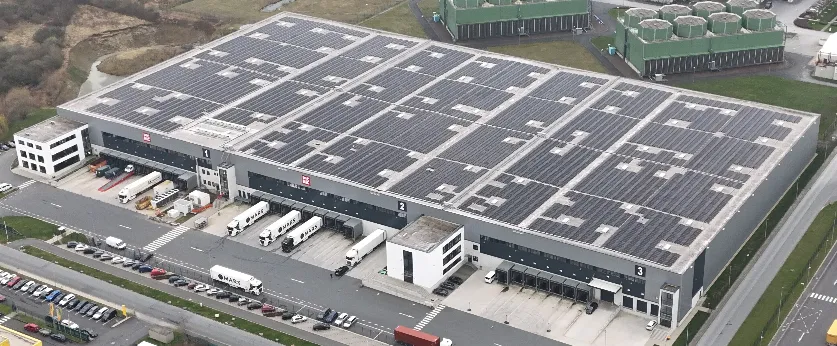
In practice this means that an 80 kWp installation on an office roof and a 3 MWp installation on a logistics hall are two entirely different types of project – technically, contractually and in terms of schedule. The transition does not happen at a particular number of modules, but where the grid connection and the marketing of the electricity become projects in their own right.
From a system size of around 100 kWp, direct marketing becomes considerably more important in practice. Depending on system size and the applicable legal framework, additional requirements for metering, remote control and marketing may apply. This is where what can sensibly be called a large-scale system begins.
As capacity increases, the grid connection is often made at medium voltage. Whether that is necessary depends on the grid operator’s requirements and the grid capacity available on site.
The funding logic changes again. For large installations, EEG auctions can play an important role. Which support mechanisms are available depends on the size and type of installation and on the legal framework in force at the time.

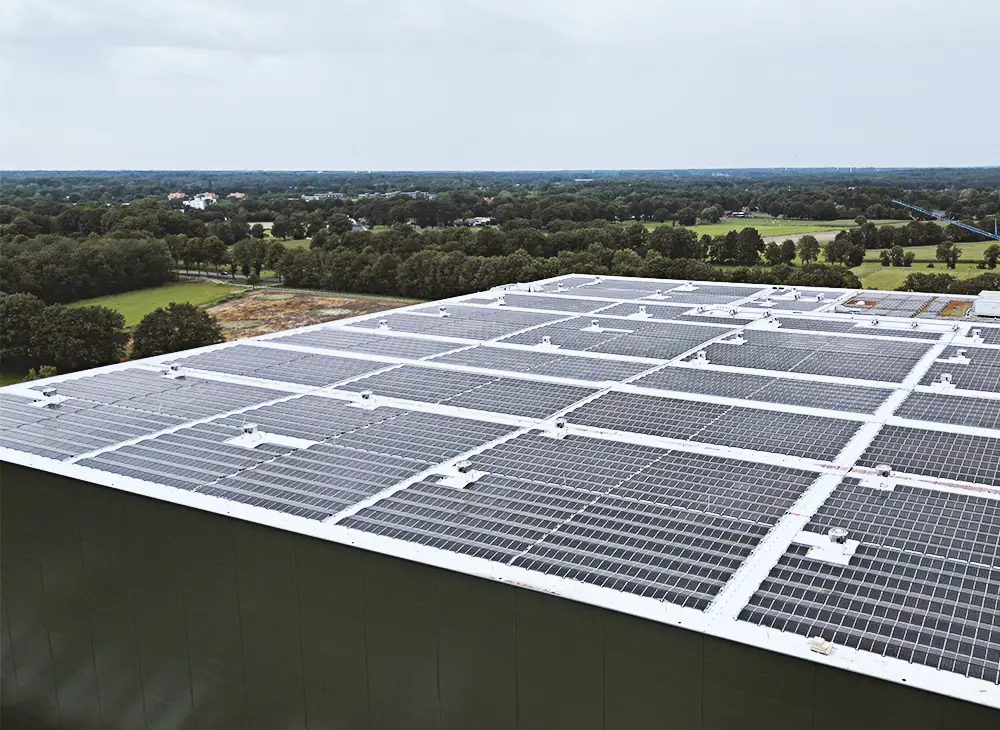
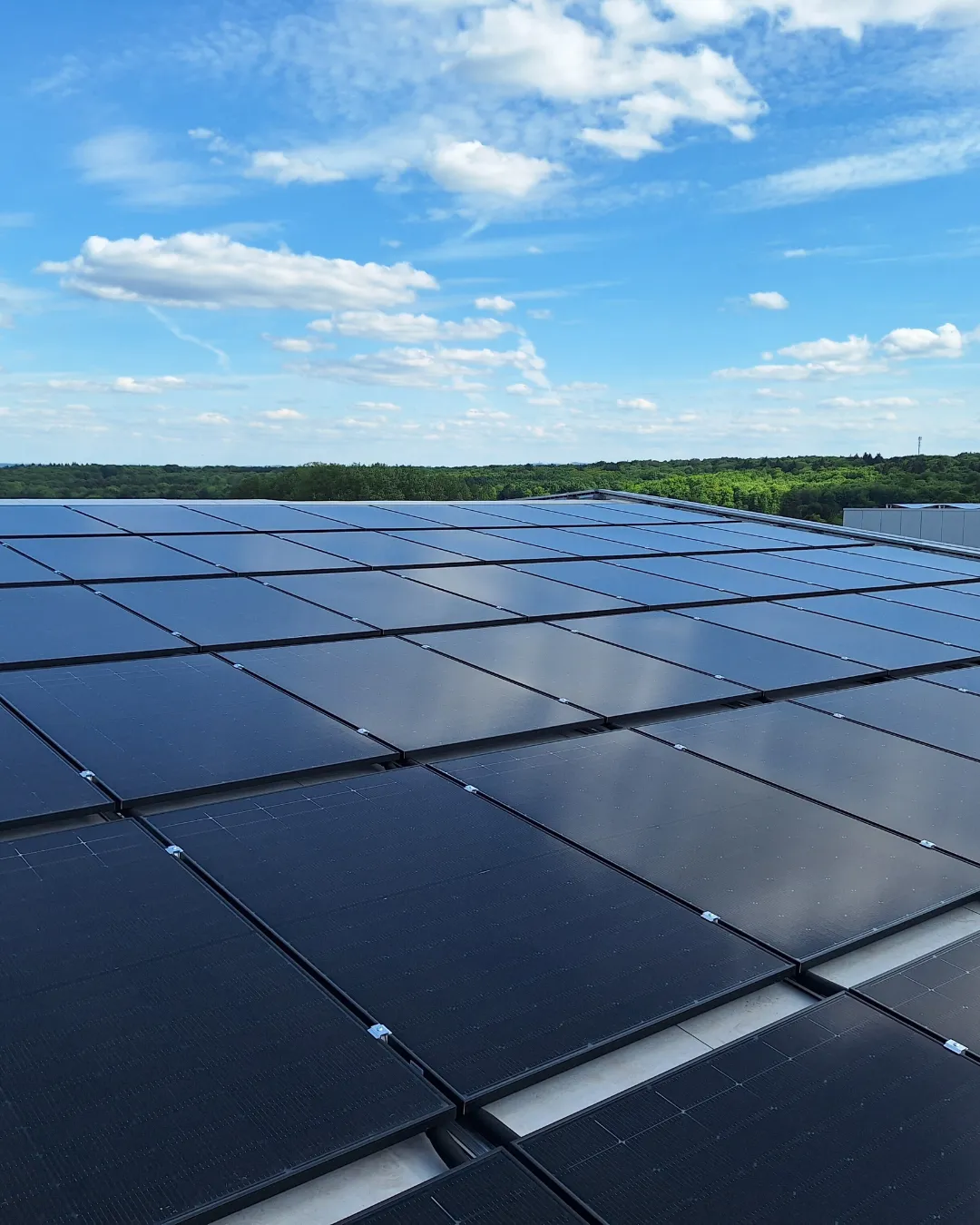
Rooftop systems use a surface that is there anyway. That usually makes them the most economical option, because no land has to be bought and in most cases no building permit is required. The decisive factor, however, is the structural load capacity. Existing roofs were rarely built with additional loads in mind. A structural assessment therefore comes at the start of every rooftop project, not at the end.
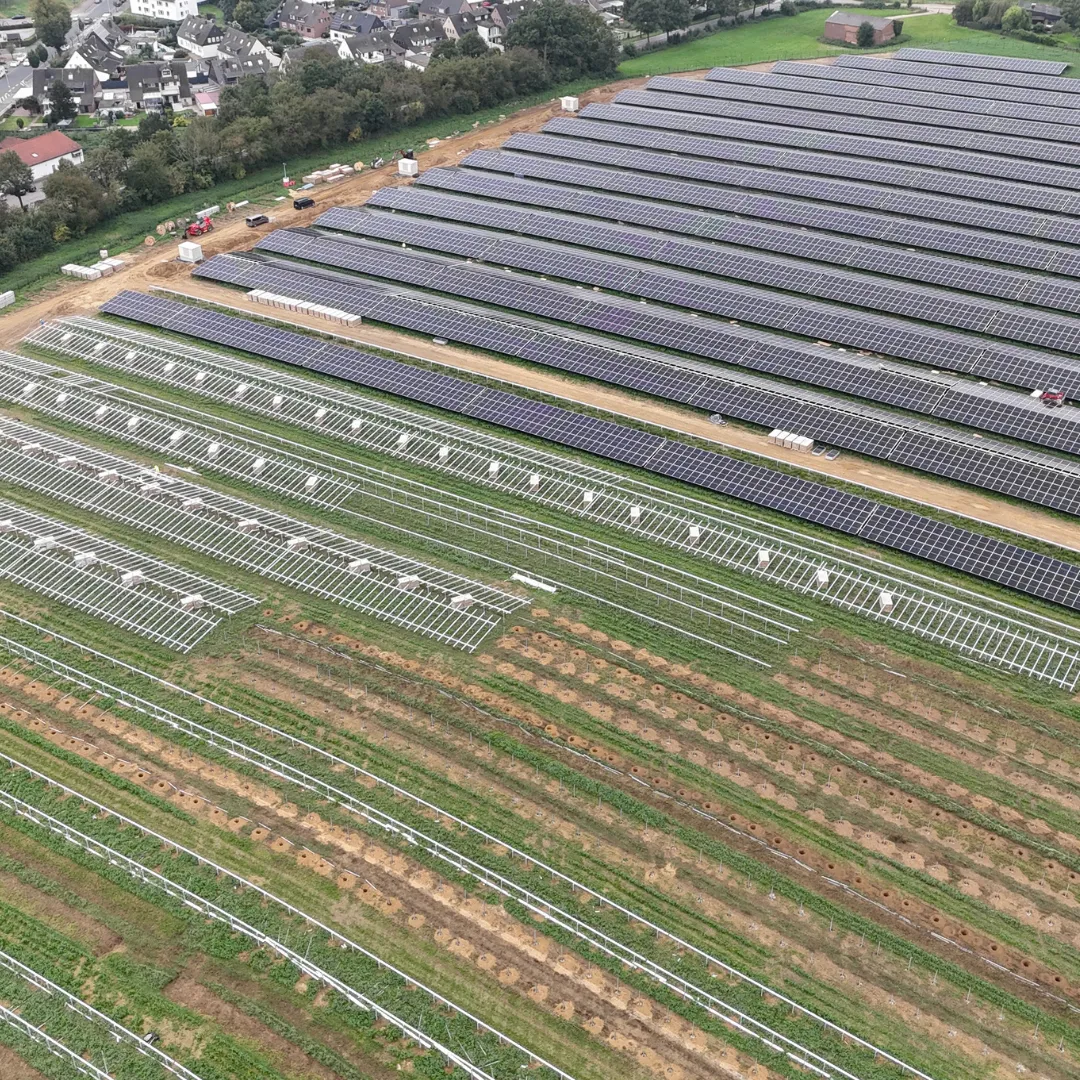
Ground-mounted systems are barely limited in area and can be oriented optimally. In return they need a site with suitable planning status, a development plan procedure and a sufficiently powerful grid connection point within reach. The lead time is considerably longer, but the economies of scale are greater.


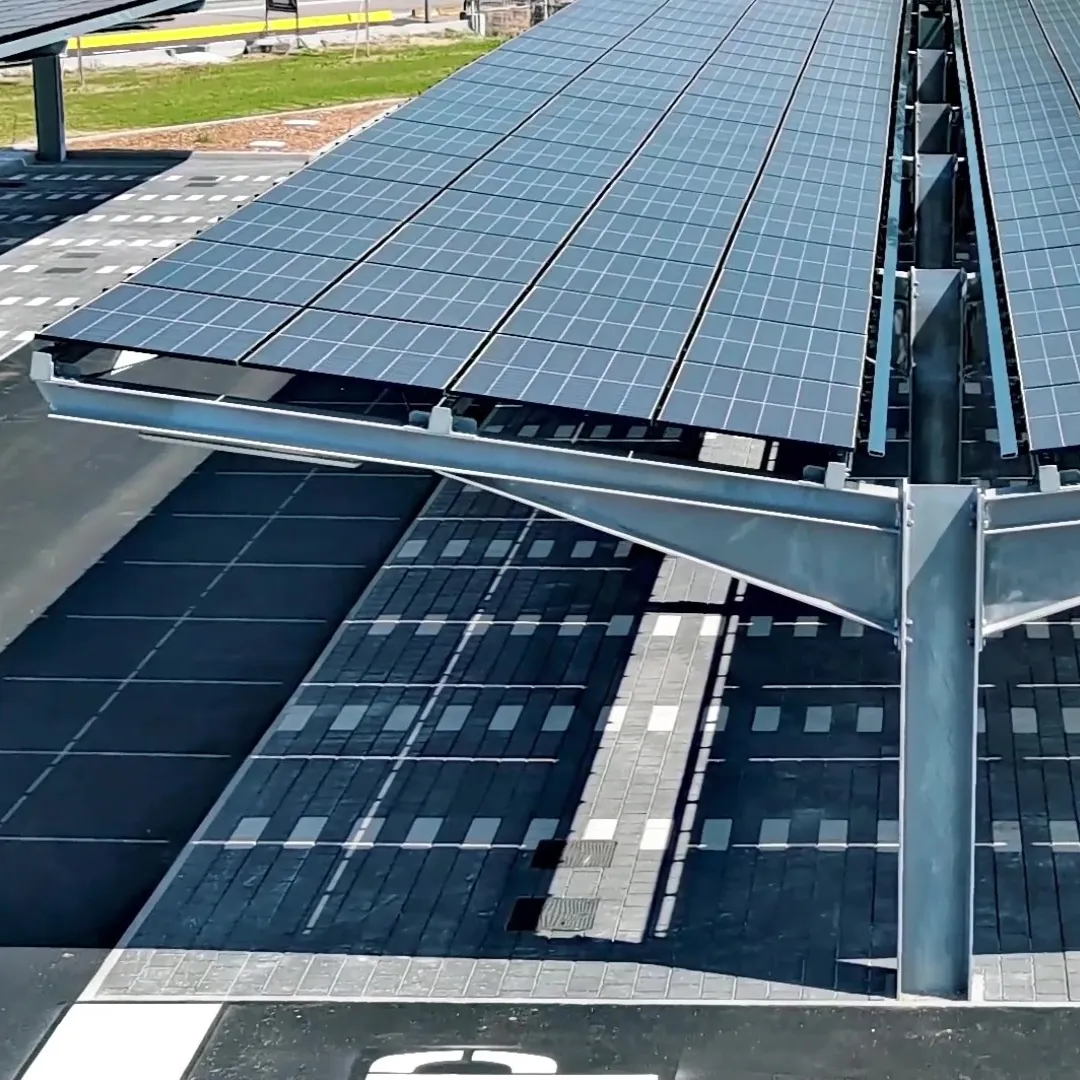
Solar carports are the special case in between: they open up sealed surfaces that would otherwise go unused and combine power generation with weather protection and charging infrastructure. At sites with large staff or customer car parks they complement a rooftop system rather than competing with it.
In larger projects, several types of surface are often combined. What matters is not which design is cheapest, but which combination achieves the highest self-consumption at the site.
With small installations, the feed-in tariff determines the return. With large-scale systems it is usually the smallest lever. Four factors count for more.
Every kilowatt hour used on site is measured against the purchase price, not against the feed-in tariff. The gap between those two figures is the real driver of returns. That is why we size a large-scale system around the site’s load profile rather than around the maximum possible roof coverage.
In energy-intensive operations, grid fees are driven by the annual peak load. Combined with an intelligently sized battery storage system, a PV installation can reduce those peaks and lower grid fees as a result.
Surplus electricity is sold on the exchange through a direct marketer. For larger installations in particular, direct marketing plays an important role in putting the electricity generated to economic use. With the right marketing strategy it becomes a source of revenue rather than an obligation.
Over twenty years, availability determines total yield. A fault that goes unnoticed for three weeks costs more than a full year of maintenance. Monitoring therefore belongs in the business case.
Yields, load profile, available surfaces and above all the question of what feed-in capacity the grid operator permits at the site. That enquiry should be made early. It determines the maximum system size and is often the longest item in the schedule.
For rooftop systems the structural assessment, for ground-mounted systems the planning status. Both are prerequisites for detailed planning and cannot be negotiated in parallel.
Module and inverter concept, wiring, transfer station, storage sizing and the connection to an energy management system.
The split between self-consumption, direct marketing and, where applicable, supply to third parties at the same site.
Installation, grid connection, certification and registration in the market master data register.
Monitoring, maintenance, yield checks and fault clearance throughout the entire operating life.
Realistically, several months pass between the first assessment and commissioning for a rooftop system, and rather one to two years for a ground-mounted system with a development plan procedure. Planning for that lead time avoids the usual friction at the grid connection.
The system size is planned before it is clear what the grid can take. The result: replanning mid-project.
This applies to older halls in particular. A roof refurbishment combined with the PV installation is often cheaper than two separate construction projects.
Maximum coverage without regard to the load profile leads to high feed-in shares and a poorer payback.
After commissioning, no one is responsible for monitoring and maintenance. Yield losses then only show up in the annual statement.


From site analysis and grid connection through to operations management – in Germany and in six other European countries. Because planning, delivery and operation are all in one pair of hands, there are no gaps in responsibility at the critical interfaces.