Operating globally
Over 400 solar installations per year
Over 15 years of experience
Home
Solutions
Direct marketing
Sell electricity and make profitable use of it

Direct marketing of solar power for businesses

If you generate more solar power than you consume, the surplus is fed into the grid. With direct marketing, the solar power fed into the public grid is balanced by a direct marketer and sold on the electricity market. For subsidized PV systems with an installed capacity of more than 100 kWp, funding under the German Renewable Energy Sources Act (EEG) is generally provided through direct marketing in the market premium model. We take care of registration, balancing group assignment and billing.
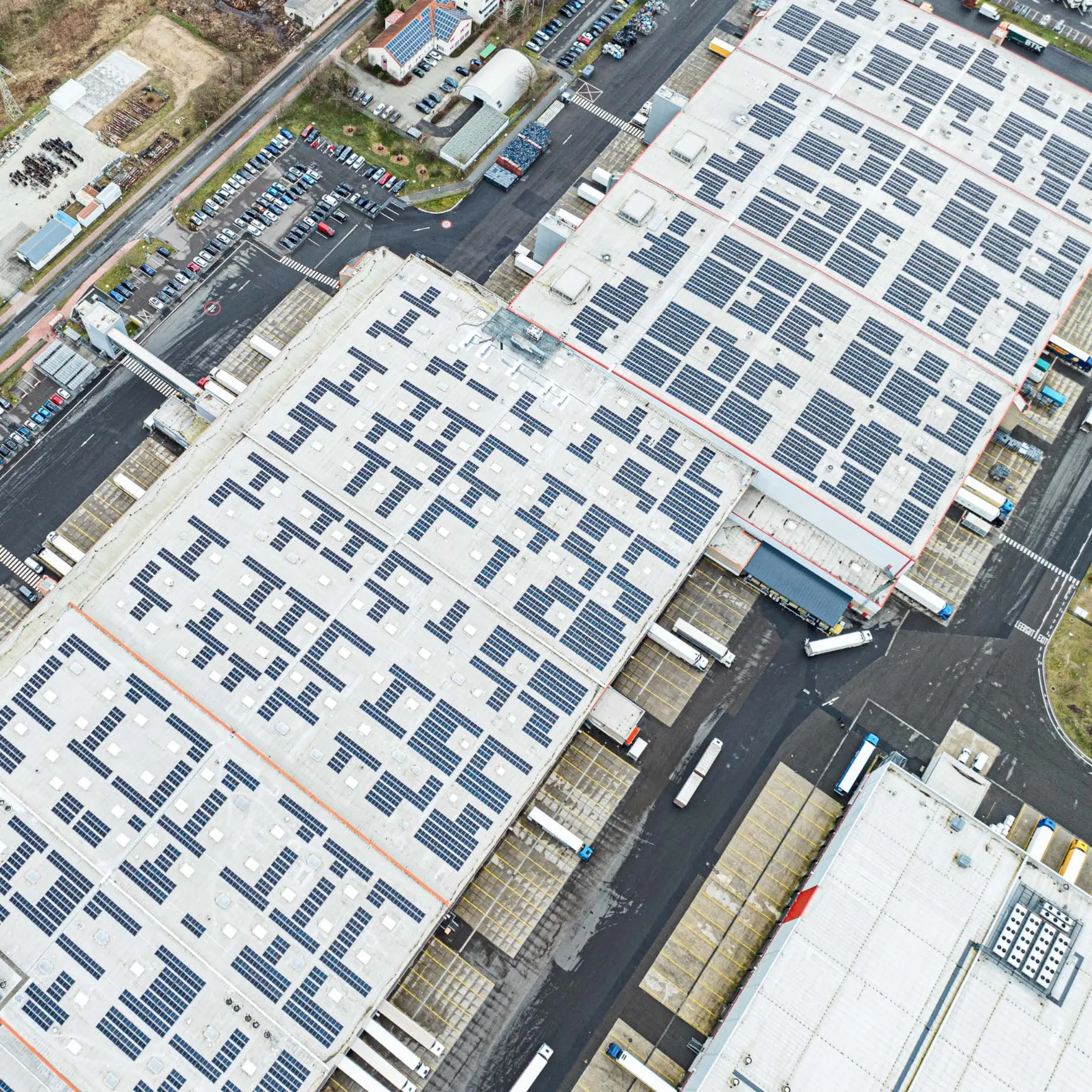
Aerial view of a Centroplan photovoltaic system
At a glance

Key facts about direct marketing

1For subsidized PV systems with more than 100 kWp of installed capacity, direct marketing in the market premium model is generally mandatory.
2Subsidized and non-subsidized direct marketing are two different routes. Only the first one earns the market premium.
3The connection to the direct marketer and the grid operator's requirements are two separate sets of requirements. Both must be met.
4Even after EEG funding ends, the electricity generated can still be remunerated through direct marketing.
Basics

Direct marketing is more than the market premium model

Direct marketing initially just means that your solar power is sold on the market via a direct marketer. Whether an additional EEG payment is made depends on the chosen form of sale.

Subsidized direct marketing
Non-subsidized direct marketing
Remuneration
Exchange revenue plus sliding market premium
Only the market or supply price achieved
Requirement
Existing EEG funding entitlement of the system
No funding entitlement required
Typical case
Subsidized systems over 100 kWp
Systems whose funding has expired, systems without funding
Price risk
Largely hedged by the sliding market premium
Borne by the operator or governed by the supply contract
Negative prices
When exchange electricity prices are negative, the entitlement to the market premium or EEG funding may lapse temporarily. This depends on the EEG rules applicable in each case.
Negative market prices can lead to costs, depending on the marketing contract.
Switching
Switching the form of sale is generally possible, subject to the statutory notification requirements and deadlines.
Use cases

Which systems direct marketing applies to

Whether direct marketing is mandatory, optional or the only remaining route depends on the installed capacity, the funding status and the age of the system.

over 100 kWp

Mandatory for subsidized systems

If the installed capacity exceeds 100 kWp, subsidized systems no longer receive a fixed feed-in tariff. The operator can choose between the market premium model (subsidized direct marketing) and non-subsidized direct marketing. If EEG funding is to be claimed, this is generally done via the market premium model. On fully covered commercial and industrial roofs, the 100 kWp threshold is almost always exceeded.

up to 100 kWp

Optional

Smaller systems can choose between the fixed feed-in tariff and voluntary direct marketing. Access has been simplified considerably in recent years. Whether switching pays off depends on the generation profile and the marketing fee.

after 20 years

Post-subsidy systems

When the funding period ends, the entitlement to the market premium lapses. At the same time, the EEG funding entitlement generally ends as well. The system, however, keeps producing. For commercial systems of this size, non-subsidized direct marketing is then the usual way to continue earning remuneration for the electricity fed in.

Your benefits

What direct marketing with Centroplan offers you

Revenue

Exchange revenue and market premium

In subsidized direct marketing, the electricity is sold on the exchange and the market premium makes up the difference to the applicable reference value. In non-subsidized direct marketing, only the market price achieved counts.

One-stop shop

One contact for system construction and marketing

System construction and marketing come from the same company. You do not have to negotiate separately with an external direct marketer.

Obligations

We handle the formalities

We take care of registration with the distribution system operator and assignment to the balancing group. You do not have to deal with the paperwork.

Technology

Remote controllability from the start

We plan the metering concept, the telecontrol connection and the grid operator's technical requirements right from the construction stage. Costly retrofits are avoided.

Transparency

Clear billing

You receive regular statements of the electricity volumes marketed and the resulting revenue, including the market premium for subsidized systems.

Existing systems

For existing systems too

Switching to direct marketing is not tied to a new build. Existing systems can also be transferred.

Technology

Two sets of requirements that are often confused

One results from direct marketing itself, the other from the grid connection and the grid operator's requirements.

From direct marketing

What the direct marketer needs

  • Quarter-hourly metering of generation and feed-in
  • A telecontrol connection through which the direct marketer retrieves the actual feed-in and reduces the feed-in capacity when required
  • Assignment of the system to the direct marketer's balancing group
  • A contract covering marketing, forecasting and billing
From the grid connection

What the grid operator requires

  • A technical device that allows the grid operator to reduce the feed-in capacity remotely
  • Master, planning and actual data via a designated operations manager (EIV) for systems subject to redispatch
  • A metering concept that meets the grid operator's specifications
  • Compliance with the connection conditions of the grid connection agreement

Which grid operator requirements apply depends, among other things, on system size, grid connection and technical equipment, and must be considered separately from the requirements of direct marketing.

Process

How the switch works

The path to direct marketing follows a standardized process that can be roughly divided into the following four steps.

1

Metering concept and technology

We review the metering concept and telecontrol connection and clarify which requirements arise from direct marketing and which from the grid connection. We add any missing components.

2

Registration with the grid operator

We register the system with the distribution system operator and initiate the change in the form of sale.

3

Assignment to the balancing group

The system is assigned to our balancing group. This lays the foundation for marketing.

4

Marketing and billing

The electricity is marketed continuously. You receive statements for the volumes sold. For subsidized systems, this is supplemented by the market premium paid by the grid operator.

Profitability

What determines revenue in direct marketing

The solar market value is systematically below the general exchange price because all solar systems feed in at the same time. Revenue is therefore not determined by the marketing contract alone, but by the design and operation of the system.

1

Use it yourself first

Every kilowatt hour consumed on site replaces expensive grid electricity and is therefore almost always worth more than any marketing revenue. Designing the rooftop PV system around your own load profile is the most effective lever.

2

Shift feed-in

A battery storage system shifts feed-in from the low-price midday hours to time slots with better prices and bridges periods of negative exchange prices.

3

Automate control

Generation, consumption and storage cannot be coordinated sensibly by hand. An energy management system analyzes load profiles and price signals and makes decisions automatically.

4

Use energy across sites

If you operate several sites, you can balance generation and consumption between them and further reduce the share that is marketed. Business Energy Sharing shows how this works.

Outlook – as of 31 August 2026

What the EEG amendment is set to change

The German Federal Cabinet adopted the government draft of the EEG amendment on 29 July 2026. The Bundestag and Bundesrat are still deliberating, and state aid approval from the European Commission is pending. The following information reflects the draft, not current law.

Under the draft, the fixed feed-in tariff will be abolished for new systems. For commercial systems over 100 kWp, this changes little in essence, because no fixed feed-in tariff applies there today. According to the government draft, direct marketing would in future also become significantly more important for many smaller systems. However, the final details are still subject to the legislative process.

According to the draft, systems commissioned by 31 December 2026 will remain in the current remuneration system. If you have a project in the pipeline, it is worth taking a look at the timeline for planning, grid connection and commissioning.

FAQ

Frequently asked questions about direct marketing

For subsidized photovoltaic systems with an installed capacity of more than 100 kWp, direct marketing in the market premium model is generally mandatory. Systems up to and including 100 kWp can usually opt for the conventional EEG feed-in tariff instead of direct marketing. Regardless of this, operators can also opt for direct marketing voluntarily if they expect economic benefits from it.

No. Direct marketing initially just describes selling electricity on the market via a direct marketer. The market premium model is the subsidized variant: the sliding market premium is added to the exchange revenue. Alongside it is non-subsidized direct marketing, in which no EEG payment is made and only the market price achieved counts.

For direct marketing, the direct marketer needs a connection through which it can retrieve the actual feed-in and reduce the feed-in capacity. This must be distinguished from the grid operator's requirements – such as remote reduction by the grid operator and participation in redispatch. These arise from the grid connection and the system size and apply regardless of how the electricity is marketed. We will be happy to support you with remote controllability. Get in touch with us.

EEG funding or the market premium may lapse temporarily when exchange electricity prices are negative. Which rules apply depends in particular on when the system was commissioned.

After the 20-year funding period expires, the entitlement to the market premium lapses, but the system continues to generate electricity. For commercial systems, non-subsidized direct marketing is then the usual route. It is often worthwhile to increase self-consumption at the same time or to conclude a power supply agreement.

Yes. Switching is not tied to a new build. It needs to be checked whether the existing metering concept supports quarter-hourly metering and whether a telecontrol connection is in place. Older systems occasionally need to be retrofitted.

Contact

Talk to us about your system.

Would you like to know whether and when direct marketing pays off for your system? Book an appointment at a time that suits you. One of our Centroplan contacts will get in touch with you.