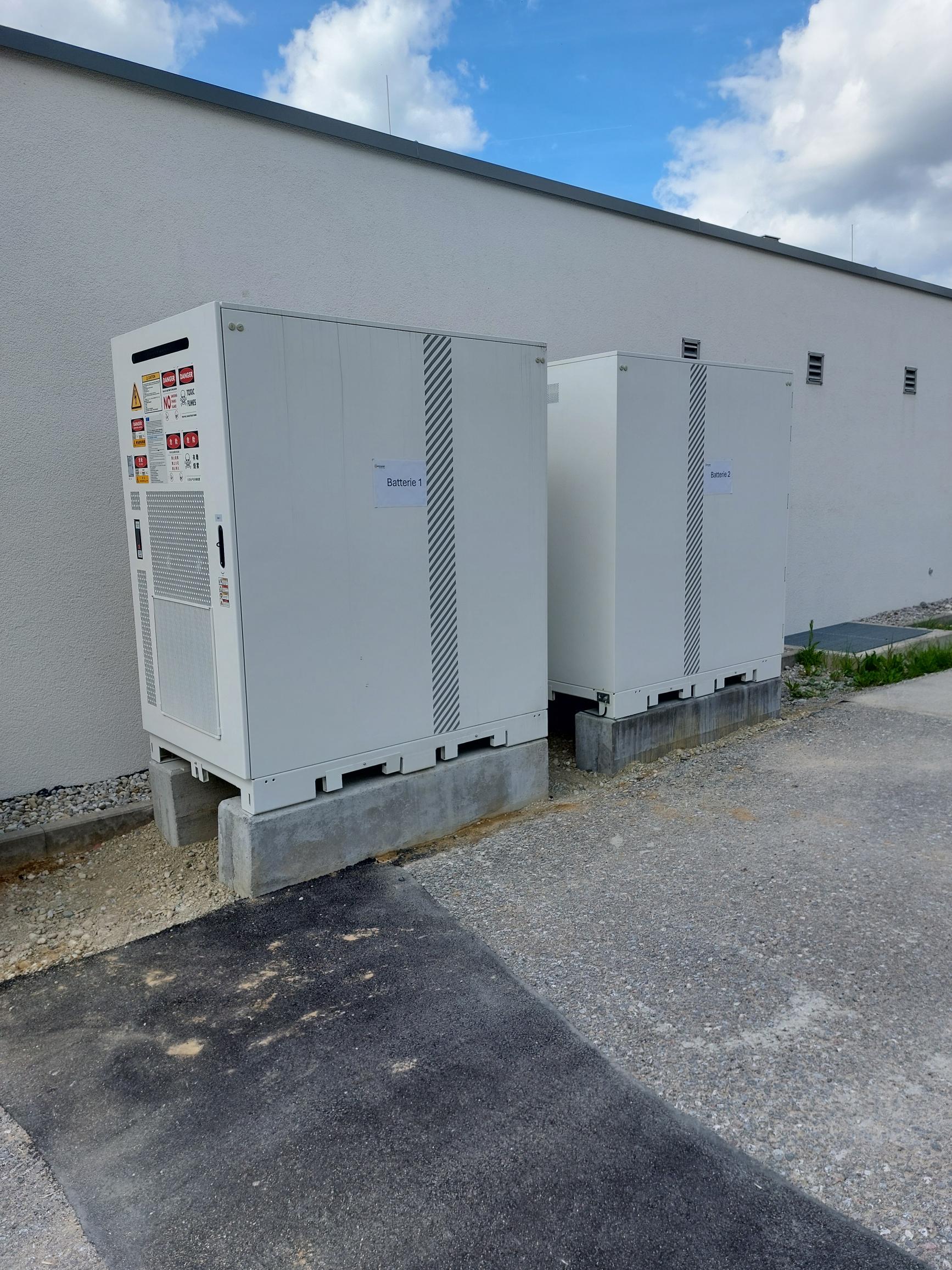
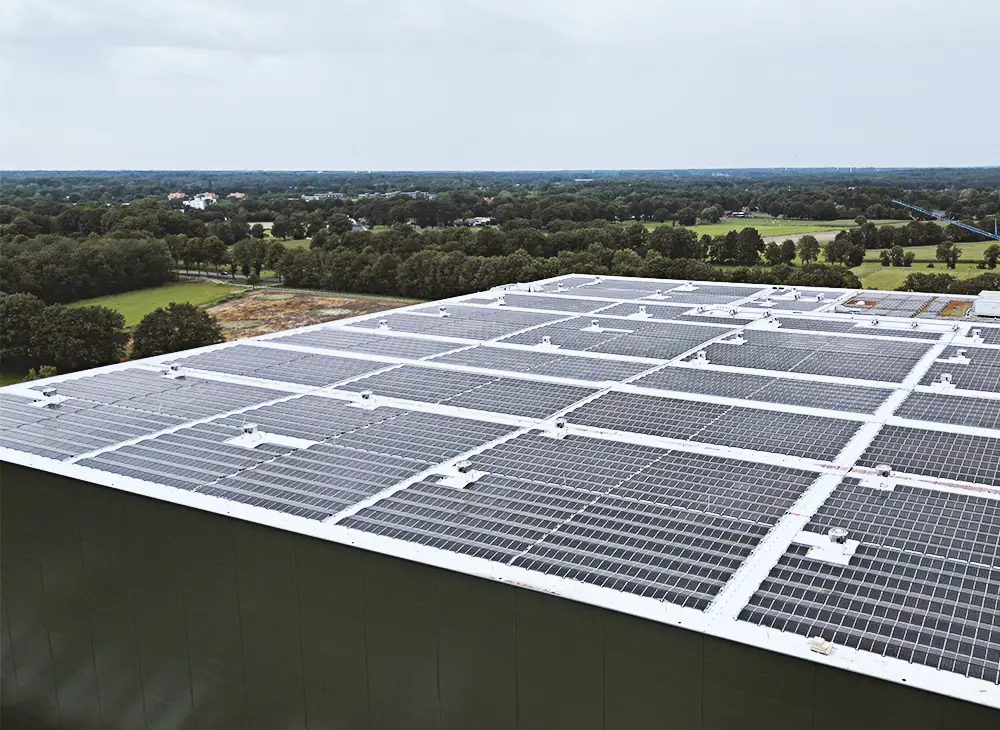
Germany's storage market is growing faster than ever. In the first half of 2026 alone, newly installed storage capacity across the country rose to around 2,480 megawatts, roughly a third more than in the same period a year earlier.* The strongest driver is no longer residential storage but large-scale battery systems on a megawatt scale. The reason is plain: solar and wind power are generated when the sun shines and the wind blows, not when the electricity is needed. Large-scale battery storage closes exactly that gap.
* Source: Internationales Wirtschaftsforum Regenerative Energien (IWR), „Speicherzubau im ersten Halbjahr 2026 in Deutschland auf Rekordkurs“, analysis of the German market master data register (Marktstammdatenregister), published on 17 July 2026.

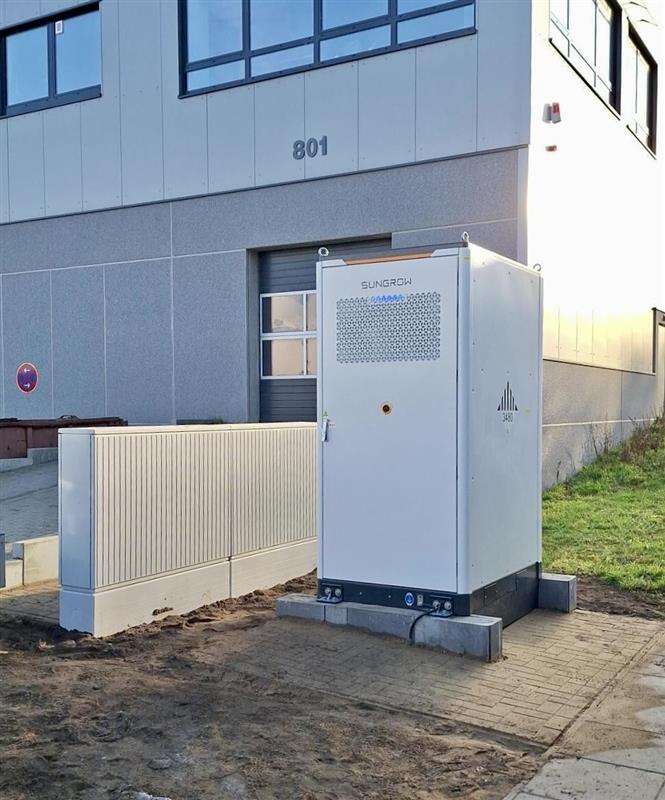
There is no fixed legal definition. In practice, the threshold applied by the German regulator has become the accepted benchmark. Under it, large-scale battery storage means electricity storage with a gross capacity of more than 999 kilowatts, so roughly one megawatt and upwards. There is no upper limit. The largest projects currently under development in Germany reach capacities in the hundreds of megawatts and several gigawatt hours of energy.
It is worth distinguishing two figures that are often confused. Together they determine the storage duration.
This describes how quickly a system can charge and discharge, and therefore how much load it can absorb at any given moment.
This describes how much energy a system holds in total, and therefore how long it can sustain its output.
The average storage duration of newly planned systems has been rising steadily for several years. Pure frequency support with short discharge times is losing ground, while load shifting over several hours is gaining.
Commercial storage typically ranges from a few dozen kilowatt hours to several megawatt hours. Large-scale battery storage usually starts in the single-digit megawatt range and is operated primarily for market and grid applications.
Commercial storage sits in a plant room, inside a hall or outdoors on site. Large-scale systems are built as container installations on a dedicated area.
Commercial storage connects at low or medium voltage, large-scale storage at medium or high voltage.
Commercial storage optimises self-consumption, peak load and backup power at the company's own site. Large-scale storage targets market trading, grid services and hybrid projects.
For commercial storage it is the company at its own site; for large-scale storage it is usually a project company, an energy supplier or an industrial operator.
The decisive difference is not just size but the logic behind it. Commercial storage is there first and foremost to optimise its own site. A large-scale battery system is usually a stand-alone asset whose revenue comes from the electricity market and from system services.
All market figures in this article are as of August 2026.
From the outside, most projects look much alike: rows of walk-in or non-walk-in containers on a fenced site, plus transformers and a transfer station. Behind that stand five components.
Almost every current large-scale project uses lithium iron phosphate. The cell chemistry is thermally more robust and longer-lived than nickel manganese cobalt systems and does without cobalt. Modern 20-foot containers hold around five megawatt hours and more.
It monitors every cell individually and protects against deep discharge, overcharging and thermal stress. That makes it a decisive factor in how quickly a battery ages.
The bidirectional inverters convert direct current into grid-compliant alternating current and back again. They also provide the control capability for active and reactive power.
Transformers, switchgear and the transfer station link the installation to the grid. Technically unspectacular, but often the critical path in the project schedule.
A higher-level system decides minute by minute on charging, discharging and reserve. Without this layer, any storage system stays below its economic potential.
On top of that come ancillary works that calculations tend to underestimate: climate control, fire protection and alarm systems, the firefighting concept, access roads, fencing and video surveillance, and the remote control technology for the grid operator.
A single application rarely carries a project today. The rule is multi-use: one system serves several revenue streams in parallel, or switches between them depending on which market currently delivers the higher contribution margin.
The classic case is time arbitrage: charging when electricity is cheap, typically around midday when solar feed-in is high, and discharging when prices climb. Trading takes place on the day-ahead and intraday markets, increasingly automated. The more the expansion of renewables widens the price spread across the day, the greater the leverage.
Transmission system operators procure balancing power to keep the grid frequency stable. Battery storage is ideally suited to this because it responds within fractions of a second. The relevant products are FCR (frequency containment reserve) as well as aFRR and mFRR. Different remuneration logics and prequalification requirements apply to availability and activation.
Storage can ease grid congestion and complement or partly reduce redispatch measures. Instead of curtailing wind and solar farms, their surplus is stored. The industry has long called for storage to be integrated systematically here. For operators, that opens up a further revenue stream in the medium term.
Hybrid projects, where a large-scale battery is built directly at a generation site, are increasing markedly. The existing grid connection point is used more fully, because generation peaks are buffered rather than curtailed. Feed-in can also be shifted into periods of high demand, which lifts the market value achievable for the electricity. For operators of ground-mounted solar farms, this is often the most obvious commercial entry point into storage.
At large industrial sites, a storage system can absorb load peaks and so reduce the demand charge. It can equally relieve an existing grid connection, for instance when charging infrastructure or new production lines are added for which a connection upgrade would take years. At this scale, the line between large-scale storage and industrial storage begins to blur.
On the cost side, the past few years have worked strongly in favour of these projects. Cell prices have fallen considerably, and systems are becoming denser and easier to install. The business case is therefore decided less by capital expenditure today than by four other factors.
How well can trading, balancing power and grid services be combined without blocking one another? A system holding balancing power in reserve cannot use that same capacity on the spot market at the same time. Managing this competition is the real value contribution of the trading software.
Every revenue strategy consumes service life. Aggressive arbitrage brings more revenue in the short term but costs cycles. Manufacturer warranties are tied to cycle counts, depth of discharge and temperature windows. The operating strategy has to match, otherwise the warranty lapses precisely when it is needed.
A model that only works under today's grid fee rules is not a model. Sound calculations include scenarios with changed conditions.
The more storage comes online, the more it flattens the very price spread from which it draws its revenue. Projects that will only enter service in a few years should reflect this cannibalisation in their forecasts.
In regulatory terms, battery storage is a special case, because it is consumer and generator at the same time. This dual role runs through the whole of energy law. Three points are particularly relevant at present.
Under the German Energy Industry Act, storage is exempt from grid fees in order to avoid a double charge when energy is stored and released. The rule was recently extended but remains provisional. Through its proceedings on the general grid fee system for electricity, the German regulator is working on a fundamental reform under which storage would in future be treated like any other consumer. At the end of May 2026 the authority presented a preliminary interim position including grandfathering. Under the current consultation status, storage projects are to be granted grandfathering subject to certain conditions. The final shape of the rules is not expected before the proceedings conclude, with a formal decision scheduled for the end of 2026.
This is currently the biggest bottleneck. By the end of 2025, grid operators were holding around 10,000 connection applications for large battery storage projects with a combined capacity of more than 400 gigawatts, many times what is actually being built. Inconsistent procedures, a lack of standardisation and long processing times delay projects considerably. It is important to know that a physical grid connection does not automatically mean the desired connection capacity has been allocated. That is governed separately in the grid connection agreement.
Large-scale battery storage counts as a structural installation and as a rule requires a building permit. Depending on the site, the size and the federal state, requirements from emissions control, fire protection, water law and nature conservation are added. There is no blanket privileged status in undesignated outlying areas. In many cases a development plan is needed, which largely determines the schedule.
As of August 2026. The regulatory framework is changing rapidly at present; the German regulator's final decision is announced for the end of 2026.
Assess the area, grid level, available connection capacity and access. Sites at existing generation plants or industrial connections have structural advantages.
Submit it as early as possible. Processing time shapes the overall schedule more than any other item.
Building law, the fire protection concept and, where required, the land-use planning procedure.
Power, capacity and storage duration are determined by the revenue model, not by technology. That order matters.
System selection, civil works, installation, electrical assembly and grid connection.
Grid compliance certificates, certification and prequalification for the balancing power markets.
Monitoring, maintenance, spare parts strategy and continuous optimisation of the operating regime across the full service life.
Technically the systems are mature and costs have come down. The real hurdles today lie in the grid connection and in regulatory uncertainty, in other words in questions decided during project development rather than in engineering. Anyone considering a large-scale battery should therefore clarify three things early on: what connection capacity is realistically available at the site, which revenue model should drive the sizing, and how robust the calculation is against changing conditions.


Whether at an existing generation plant or an industrial site: we support projects from site and grid analysis through sizing and delivery to operational management. Get in touch and we will look at your case together.